Loading...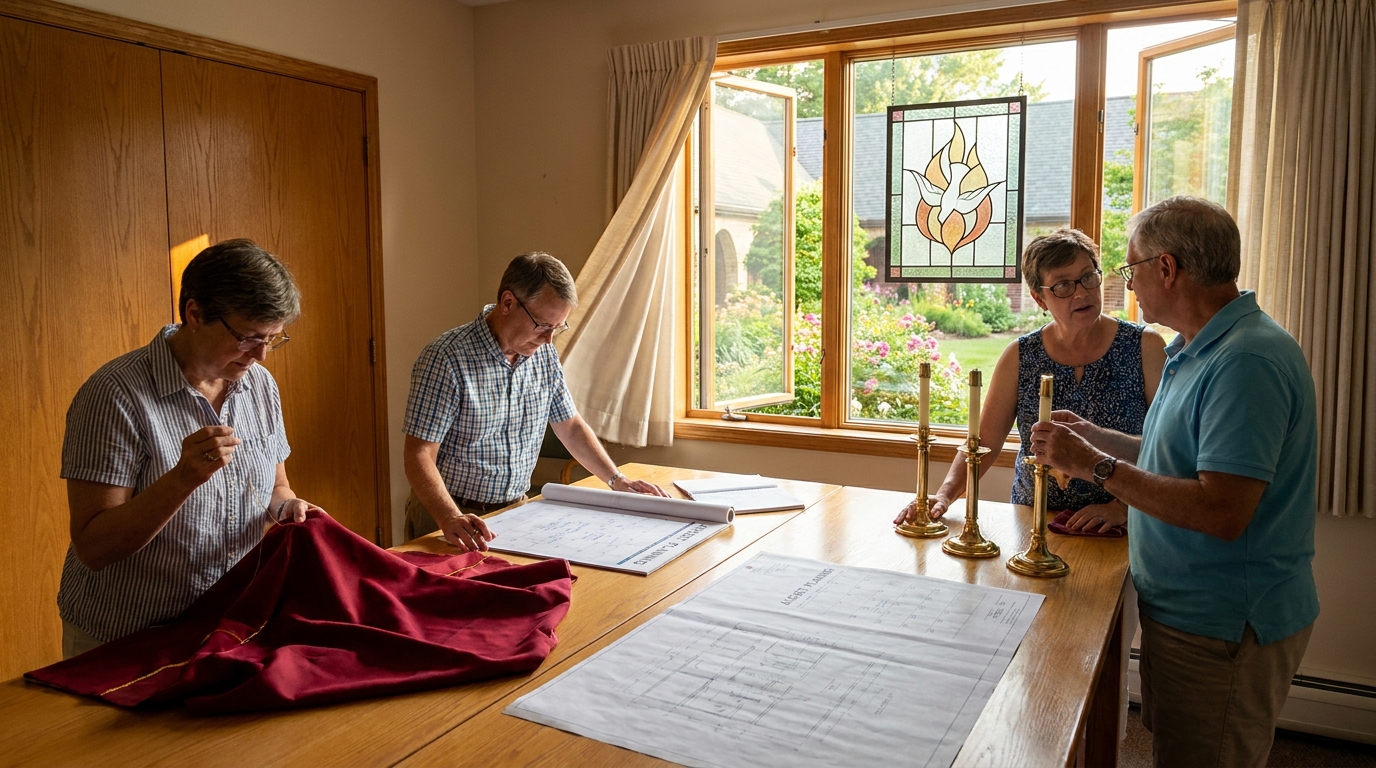
Two weeks ago, we wrote about building a simple summer prayer habit — the personal kind, the kind you can pray in a beach chair or a minivan. This week, the Spirit pushes us from my prayer life into ours. Pentecost has a way of doing that. The wind blows the doors open, and suddenly the disciples are not a private prayer group anymore. They are a body, sent.
That is a useful word for vestries and wardens right now. Because in a lot of small parishes, the calendar is about to go quiet. Choir takes a break. Sunday school suspends. Coffee hour thins out. The supply priest rotates in. And it can feel, honestly, like the work pauses too.
It doesn't. It just changes shape.
The Green Season Is Not a Furlough
The Season after Pentecost — the long green stretch from early June through the Feast of Christ the King in late November — is the longest season in the church year. It is also the one most likely to drift. Programs sleep. Committees stop meeting. Pledges get quieter along with the pews.
But green is the liturgical color of growth and ordinary fidelity, and that is not an accident. The church wears green precisely in the months when there is no Christmas pageant or Lenten study to lean on. What's left when the programs pause is the actual body of Christ in your parish: the people. Tending that body is vestry work. It might be the most important vestry work you do all year.
Pentecost is not the disciples staying together in the upper room. It is the Spirit pushing them out into the street, into other languages, into a crowd they didn't plan for. A parish summer can look the same way — if we lead it that way.
Three Quiet Ministries for June, July, and August
Here is what we'd gently put in front of every vestry and bishop's committee heading into the summer. None of it requires a budget line. All of it requires somebody to notice.
1. Relational ministry. Divide the parish directory among the vestry. Each member takes ten to fifteen households and commits to one real touch over the summer — a phone call, a porch visit, a handwritten note, a coffee. Not a stewardship ask. Not a committee recruit. Just: How are you? We've missed you. We're praying for you. Report back at the July meeting. You will be astonished what surfaces — a job loss, a new grandchild, a quiet illness, someone thinking about coming back.
2. Pastoral check-ins on the edges. Every parish has a ring of people who are almost in — the family that came twice at Christmas, the widower who stopped coming after the funeral, the young adult home from college. The clergy can't reach all of them. Wardens and vestry members can. Make a list. Make a plan. The summer is when those connections either deepen or evaporate.
3. Discernment for the fall. Use the slower meeting rhythm to actually think. What worked this past program year? What didn't? Where is the Spirit nudging? A summer vestry retreat — even three hours on a Saturday morning with coffee and a prayer book — is worth more than four rushed September meetings trying to launch everything at once.
Hold the Body Together When It Scatters
People will travel. People will visit grandchildren. People will sit on docks instead of in pews. That is not a failure of the parish; it is, in a small way, the Pentecost pattern. The disciples scattered too. The question is whether they come back richer — with stories, with rest, with new eyes — or whether they drift.
A few small moves help the scattering stay connected:
- A short weekly e-blast from the senior warden, not just the rector — a paragraph, a prayer, a photo of who's at the 10 a.m. service that Sunday.
- A "where I prayed this week" bulletin board in the parish hall, with index cards and a pen. Travelers leave a note. Stay-at-homes read them.
- An open invitation to Compline on a porch, on a Wednesday, with whoever shows up.
- A shared summer read — a short one — that the vestry agrees to discuss together in August.
None of this replaces Sunday morning. All of it tells the parish: you are still a body, even when you are spread out.
A Pentecost Word for Wardens
If you serve on a vestry, you signed up for fiduciary work — budgets, buildings, the boiler. That work is real and it matters. But the deeper call of the office is to tend the communal bonds that make a parish a parish. In the program year, the calendar does some of that work for you. In the summer, the calendar steps back, and the call becomes more naked: do you know your people? are you praying for them by name? would they know it if you stopped?
Pentecost is the feast of a community formed across difference by the Spirit's own initiative. Your parish is one such community. The summer is not a pause in that work. It is, quite often, where the work actually happens — one phone call, one porch, one prayer at a time.
Come September, you will know.
Keep Reading This Summer
This is the second piece in our summer formation series. A midsummer parish check-in and a back-to-program-year guide for vestries are coming next. Subscribe to the Episcopal.me newsletter to get them in your inbox — and share this reflection with your wardens and vestry before your next meeting.