Loading...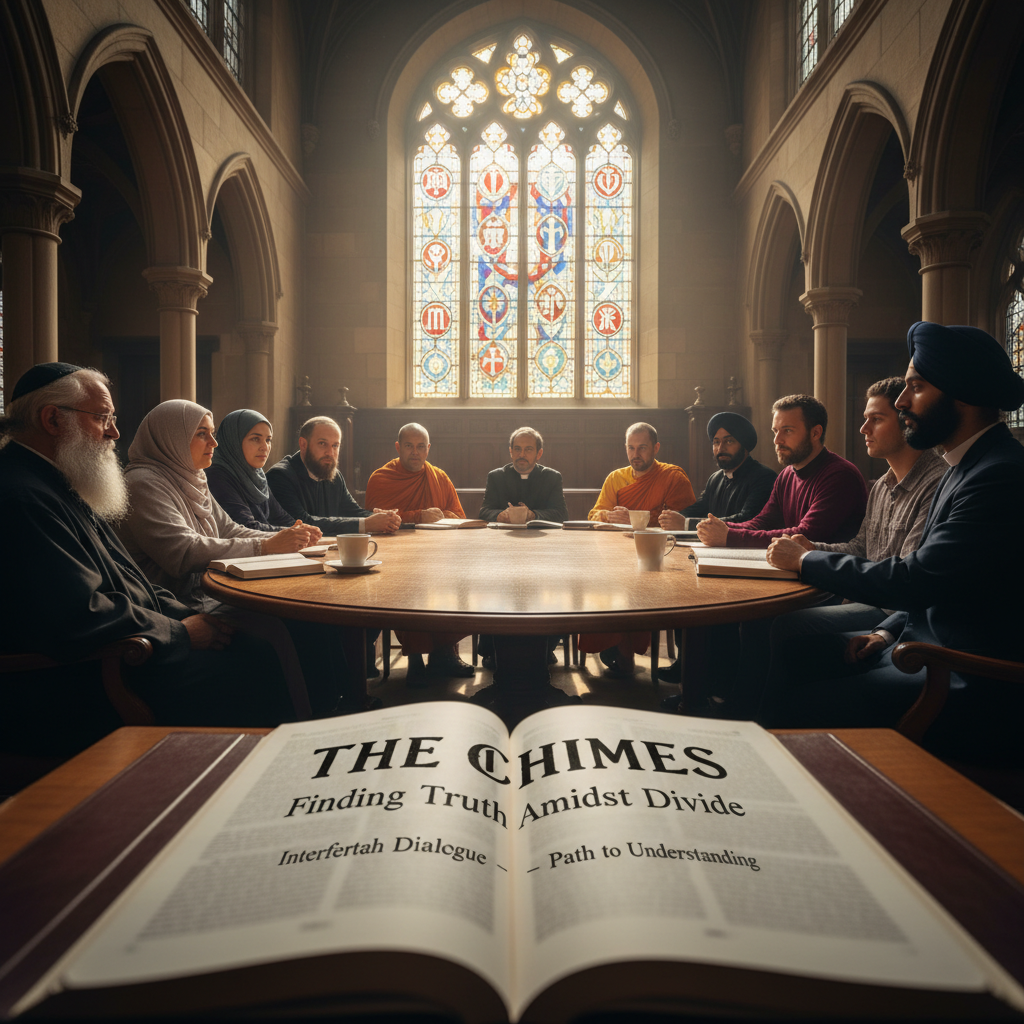
Finding Truth Amidst Divide Through Interfaith Dialogue
In our vibrant and complex world, it often feels as though divides are widening, and understanding seems harder to grasp. Yet, as people of faith, we are called to be beacons of hope, reconciliation, and profound love. Especially during this glorious season of Eastertide, when we celebrate the transformative power of Christ's resurrection, we are invited to live out this new life in ways that bridge gaps and seek common ground. One powerful way we can do this is through interfaith dialogue—a journey not of compromise, but of deeper understanding, both of others and of our own faith.
Living the Easter Promise: Transformation Through Dialogue
Eastertide is a season of new beginnings, of witnessing the resurrected Christ's ongoing work in the world. It calls us beyond the walls of our church and into active engagement with our neighbors, regardless of their background or belief. Interfaith dialogue isn't just a polite conversation; it's an active expression of our resurrected life, seeking reconciliation, understanding, and bearing witness to God's expansive love in a diverse world.
Our baptismal covenant calls us to "strive for justice and peace among all people, and respect the dignity of every human being." These are not just words but a profound commitment that compels us to listen, learn, and engage with those whose spiritual paths may differ from our own. As the monastic community of the Society of Saint John the Evangelist (SSJE) reminds us, transformation is a journey where we encounter Christ even amidst our doubts and difficulties [1], [2]. This personal spiritual transformation is excellent preparation for the humbling and enriching work of interfaith engagement.
"Will you strive for justice and peace among all people, and respect the dignity of every human being?"
— The Book of Common Prayer, The Baptismal Covenant, p. 305
This commitment positions interfaith work squarely within the Episcopal Church’s broader mission of justice, reconciliation, and active engagement with the world. It is about living the "new creation" in concrete ways, extending Christ’s transformative power through our willingness to step into uncomfortable spaces with grace and curiosity.
Encountering Paradox, Deepening Faith
Engaging in interfaith dialogue can feel daunting. Some might fear it will challenge or dilute their own faith. However, true dialogue doesn't demand we compromise our core beliefs; rather, it often deepens them, revealing new facets of God's boundless love and wisdom. It encourages us to approach complex truths with maturity and humility.
Presiding Bishop Sean Rowe, in his recent Easter message, offered a profound theological lens for navigating such complexities. He spoke of Holy Saturday, a day often overlooked, as a time of "paradoxical truths"—where despair and hope coexist, where God is at work in silence and uncertainty [4]. This theological framework encourages us to embrace the nuances and diverse perspectives inherent in interfaith conversations. It reminds us that God's truth is vaster than any single tradition can fully encapsulate, and that by listening to others, we might even deepen our understanding of our own faith.
"Love the Lord your God with all your heart and with all your soul and with all your mind and with all your strength.’ The second is this: ‘Love your neighbor as yourself.’ There is no commandment greater than these.”
— Mark 12:30-31
When we engage with sincerity, we often discover shared values—compassion, justice, peace, and the desire for a better world. These commonalities, rooted in our shared humanity and often inspired by divine guidance across traditions, become building blocks for unity amidst diversity.
Practical Paths to Understanding and Connection
How do we, as a parish and as individuals, embody this call to encounter and understanding? Our parish already provides many avenues for spiritual growth and engagement that can prepare us for this work. Our adult formation programs, spiritual growth groups, and social justice ministries are natural places to begin or deepen these conversations. This topic directly feeds into these, offering a practical way to engage with the world and enriching existing outreach initiatives by fostering interfaith collaboration.
Resources like the daily reflections from the SSJE, "Brother, Give Us a Word," can guide us in personal spiritual growth, equipping us with the spiritual grounding to engage respectfully and thoughtfully with challenging ethical and social issues [3]. They help us encounter Jesus even in doubt and guide us with frameworks like the Beatitudes through difficult times.
Beyond structured programs, the call to interfaith understanding begins in our everyday lives. It’s in our workplaces, our neighborhoods, and our social circles. It’s about listening with genuine curiosity, seeking to understand before being understood, and recognizing the inherent dignity in every person we meet. Every interaction with someone of a different background or belief system is an opportunity to practice curiosity, humility, and love—the very hallmarks of our Christian walk.
In an increasingly polarized and pluralistic world, parishioners often seek guidance on how to engage thoughtfully and faithfully with neighbors, colleagues, and friends of other traditions. By embracing interfaith dialogue, we offer tools for navigating personal doubts and complex worldviews within a solid faith context, helping our community live their faith authentically and compassionately.
An Invitation to Transform and Connect
As we continue our journey through Eastertide, let us embrace the transformative power of dialogue. Let us commit to seeking truth amidst divide, not by erasing differences, but by understanding them, respecting them, and finding the divine threads that connect us all. This journey strengthens our faith, enriches our community, and allows us to truly live the Easter promise of new life and boundless love.
We invite you to join us in prayer for deeper understanding and reconciliation among all people. Consider seeking out opportunities to learn from our neighbors of other faiths, perhaps by attending an interfaith event in our community, or simply by committing to truly listen to those whose perspectives differ from your own. Let us be instruments of peace and understanding, living examples of Christ's love in our fractured world.
References
- Transform — SSJE – Brother, Give Us a Word, 15 April 2026. https://www.ssje.org/2026/04/15/transform/
- Reveal — SSJE – Brother, Give Us a Word, 14 April 2026. https://www.ssje.org/2026/04/14/reveal/
- The Bad News Precedes the Good News – Br. Curtis Almquist — SSJE – Brother, Give Us a Word, 11 April 2026. https://www.ssje.org/2026/04/11/the-bad-news-precedes-the-good-news-br-curtis-almquist/
- Presiding Bishop Sean Rowe’s Easter message — Episcopal News Service, 4 April 2026. https://episcopalnewsservice.org/2026/04/04/presiding-bishop-sean-rowes-easter-message/